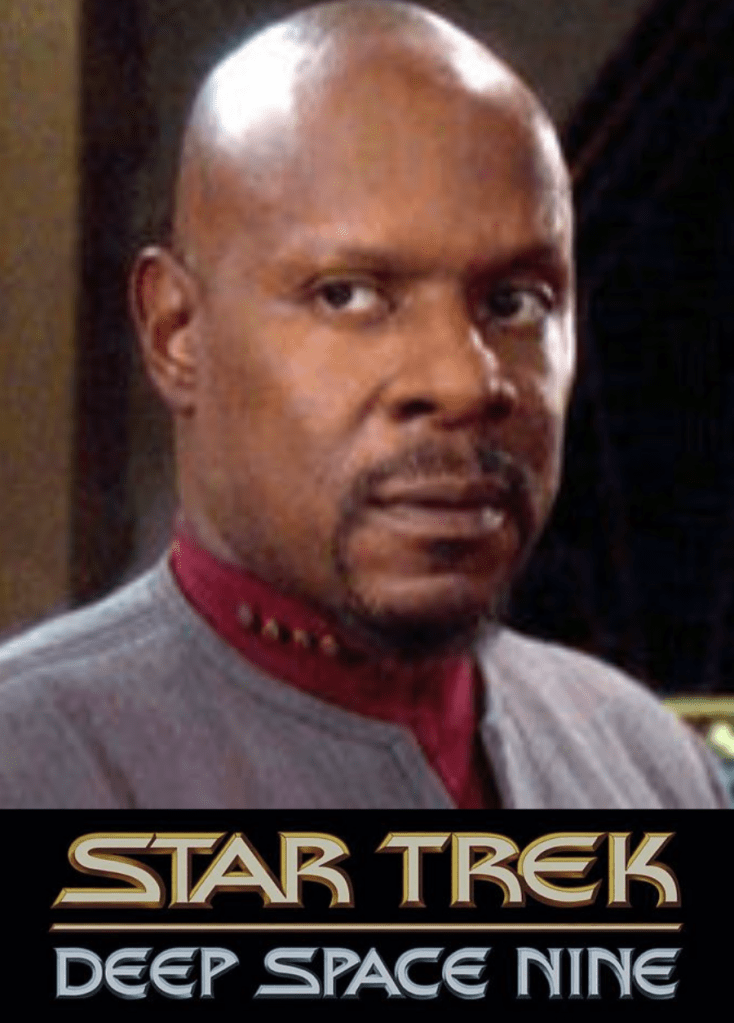
DISCLOSURE: This blog post contains affiliate links that will take you to the ENTERTAINMENT EARTH website where you can PURCHASE the featured Commander Sisko action figure along with other great toys and collectibles. I will receive a small commission if you make a PURCHASE.


This is a 9 stanza monologue poem delivered by Avery Brooks as Commander Benjamin Sisko on Season 6 Episode 19 of “Star Trek: Deep Space Nine” which was entitled “In the Pale Moonlight”. So I guess you can say that this is a Deep Space Nine stanza poem. (Please forgive me for the joke).
This monologue poem is more of a 2 minute soliloquy where Commander Sisko looks directly into the camera and explains to the audience his mindset and how he had to become evil in order to defeat evil. He’s willing to live with the guilty conscience created by his actions.
The Rhyme Scheme of this monologue poem breaks down into 9 quatrain stanzas (4 line stanzas) where lines 1, 2 and 3 rhyme with each other while the 4th line does NOT rhyme with anything. The 4th line acts as a conclusion to the thought, like a period at the end of a sentence. I have seen this type of rhyme scheme used in the brilliant poetry of Maya Angelou. Maya Angelou used this rhyme scheme in her poem ” No Loser, No Weeper” to explain her mind set about losing things and how she won’t allow someone to just take something from her, especially not the man she’s romantically involved with. The way that Maya Angelou explains her mind set in the poem is the exact same way that Commander Sisko explains his mindset about having to do evil in order to defeat evil. This seems to be a great rhyme scheme to use for explaining your state of mind directly to the audience.
If I were to perform this monologue poem, I would confidently explain myself to the audience without allowing a guilty conscience stop me from saying what I did was right. In each stanza, I would speak each of the rhymed lines with a different volume and a different tone to highlight that I’m using the same end sound 3 three times. I would also put a brief pause after the 4th line in each stanza.
As always, check out the monologue poem BELOW. Then please LIKE, COMMENT ON and FOLLOW this blog.

 James Ivan